I already knew that respiration was fundamentally about Exchange, but what compels us to take one breath after another?
Curious, I looked it up and learned that it’s the brain responding to rising carbon dioxide levels and changes in blood pH.
My original assumption had been wrong—I’d always thought we were compelled to breathe due to a need to supply oxygen.
It was a humbling reminder to keep my mind open as I explored the Respiratory System in the subtle bodies.
The Supraphysical Body: Supporting the Physical Breath
I recalled what I already knew about the supraphysical body and how it breathed.
When we inhale physically, the supraphysical Respiratory System inhales with us. When we exhale, it exhales. When our physical breathing speeds up, supraphysical respiration speeds up.
I’ve observed the supraphysical body supporting every physical function. When physical communication or function is compromised, such as following an injury, the supraphysical body steps in to do what the physical body is having difficulty accomplishing.
But the supraphysical Respiratory System also appears to do something more.
In Gemstone Therapy, we understand that atmospheric gases carry energetic spectra that support the life of Earth. I’ve observed that the supraphysical Respiratory System transforms the spectrum of the oxygen we inhale, making it more harmonious and useful to the human body.

The Emotional Body and Feeling-Photos
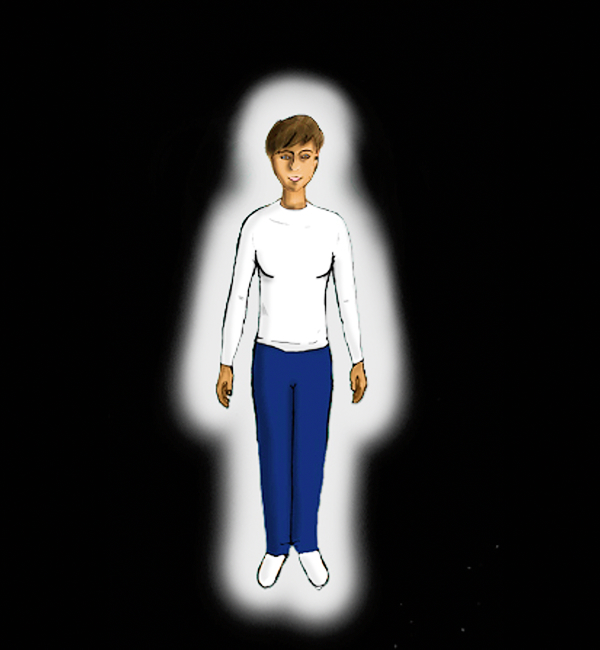
In the emotional body, the Respiratory System is more about function, and lungs are no longer required. Instead of exchanging carbon dioxide and oxygen, the emotional body exchanges information about emotions—and only when needed.
To explore respiration in the emotional body, I was shown a vision of myself at a crowded party.
Many of the people there knew me. Some didn’t. Some were curious about me, and others held opinions.
My emotional Respiratory System was suddenly presented with information about each person whose feelings had something to say. It was like being shown photographs of their feelings.
I didn’t need to take on their emotions to receive this information. I just had the opportunity to view their feeling-photographs.
At the same time, I was projecting my own feeling-photographs. In this learning environment, mine were intentionally neutral.
Those photographs can be extraordinarily useful.
They help us gauge what’s happening around us.
Unconsciously, we look at these photos and instantly know who is safe to approach and who holds such strong opinions about us that we should avoid them. Collectively, they tell us how much we can relax or need to remain guarded.
Because this usually happens without our conscious awareness, we may not recognize what is happening when the amount of information becomes overwhelming. We simply know that we don’t feel well.
So we look for an explanation.
Was it something I ate?
Am I feeling drained by the overhead lighting?
Is it too warm in here?
Sometimes one of those explanations will be correct. But sometimes, in my experience, the overload may actually be occurring in the emotional body.
Becoming consciously aware of this emotional body respiratory mechanism may make it much easier to handle being among people.
We Exhale Emotionally, Too
Emotional respiration isn’t only receptive, because respiration is about exchange.
We also communicate our own emotional photographs into the environment, giving others a read on us.
During a recent trip to Germany, my husband and I walked through a hotel lobby filled with people. They all stared at us, which felt uncomfortable.
I smiled and may have nodded, but I was also aware of doing something energetically.
I was communicating my own feeling-photos: We aren’t a threat. We’re simply visiting. We’re happy to be here.
That was an emotional exhale.
But looking back, I realize something else was happening at the same time.
The Causal Body: Do We Have a History Here?
As I walked through that lobby, I also felt that my causal Respiratory System was exchanging information with the crowd.
It was posing a question:
Do I have a relationship with any of these people that requires resolution?
I felt the answer was no. I sensed no past-life involvement with them that required resolution. My daughter, who lives in Germany, explained that their staring was simply a cultural response to strangers.

A different example occurred while visiting a World War I cemetery in France.
I felt compelled to ask my husband to stop the car so I could walk through that cemetery—in the rain. I felt a relationship to the place, and not necessarily with any person. Within my understanding of the causal body and past lives, something in that environment seemed to correspond with something in my own history.
That initial recognition was all my causal Respiratory System needed. Later, other systems would come into play to help with the resolution itself.
Later that night, I dreamed about World War I.
I understood the dream as a way of gaining greater awareness of my connection with that period and this particular place. I awoke with a sense of peace and resolution.
This experience helped me recognize that causal respiration can exchange information not only about people, but about places. The Respiratory System makes the connection; if something remains unresolved, other systems can then help us respond to it.
The Mental Body: Exchanging Thoughts
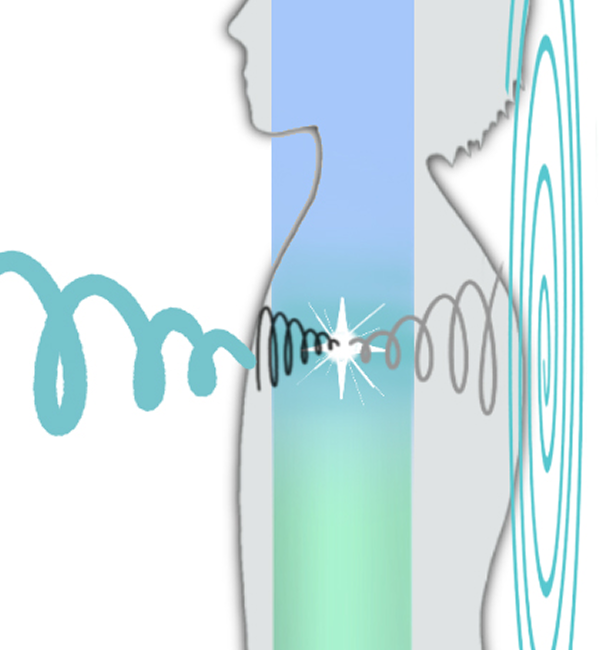
I then explored respiration in the mental body, and it looked nothing like physical breathing. Instead of exchanging carbon dioxide for fresh oxygen, we exchange thoughts with our mental environment.
Most of us have a familiar repertoire of thoughts. I call it our mental corral. It consists of the thoughts we think of most often and those we wish to keep private.
This corral exists within a much larger field of thought—the universal mind.
I sometimes think of the universal mind as an enormous library. Possibilities exist there that may not yet have entered our individual awareness or thought corral.
Mental respiration allows an exchange with this larger field, but only when we’re looking for it.
When we’re working on a problem, creating something new, composing original music, developing a scientific theory, or figuring out how to repair something that has never broken in quite this way before, we can reach beyond our familiar mental corral.
We effectively exhale the problem into the larger mental environment.
Then we become receptive.
And sometimes something comes back that we haven’t thought of before.
That is the inhale.
The more convinced we are that we already know the answer, the less room there may be for something new to enter. Curiosity and receptivity seem to matter.
The Intuitive Body: An Exchange of Knowing
Respiration in the intuitive body is different again.
The mental body deals in thought.
The intuitive body deals in knowing.
Here I had to let go of another assumption. I initially wondered whether intuitive respiration might describe the exchange between the intuitive body and Soul.
But that’s not what I observed.
There does appear to be communication between the intuitive body and Soul, but I suspect another system is responsible for it.
Respiration within the intuitive body appears instead to concern our relationship with the field of knowingness available to us.
I don’t mean the complete knowingness of Soul. I mean the knowingness into which a particular individual is capable of moving during this lifetime—or perhaps across a span of lifetimes.
Exchange at this level can be profound.
It can move us beyond an existing level of knowing or self-awareness into something entirely new.
I’ve experienced periods when my consciousness seems capable of opening into something much larger, until I reach a point at which I’ve simply had enough. I need to rest, turn my attention elsewhere, and allow what I’ve experienced to settle.
Eventually, I may be ready for more.
Compared with physical respiration, an intuitive “breath” might be extraordinarily rare.
But perhaps that’s because a single exchange can change so much.
Exchange Happens When Needed
Initially, I tried to understand subtle-body respiration by comparing its rate with physical breathing. But that took me quickly to a dead end.
Unlike the supraphysical body, whose respiration follows the rhythm of physical breathing, the higher subtle bodies appear to breathe only when exchange is needed.
When I’m by myself at home, my emotional body has little reason to actively exchange with its environment, so it doesn’t. In a crowded train, the situation changes dramatically. My emotional body takes feeling-photos of the people nearby, helping me sense how safe I am in that environment.
The causal body exchanges information with its environment when we encounter a person or place that may have significance for us. The exchange helps us discover whether there is something that requires resolution.
The mental body exchanges when we genuinely seek something beyond what we already know.
The intuitive body may exchange when we’re ready and capable of moving into greater knowingness. This might occur only a few times in a lifetime.
What Quartz Has Taught Me About Respiration
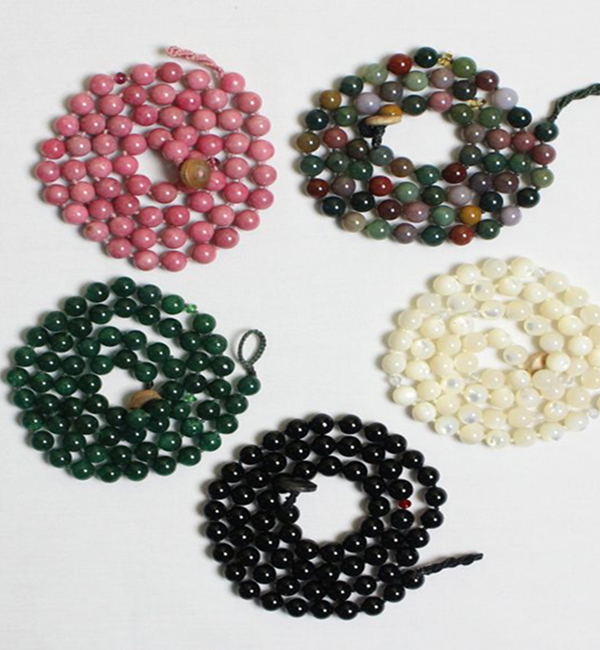
This exploration gave me a new appreciation for one of the simplest gemstone combinations I work with: Clear Quartz and Frosted Quartz. The pair is called Harmony, and its purpose is balance. I’ve known Harmony as the vitalizing gemstone pair for the Respiratory System, but now I wanted to understand how it affected the subtle bodies too.
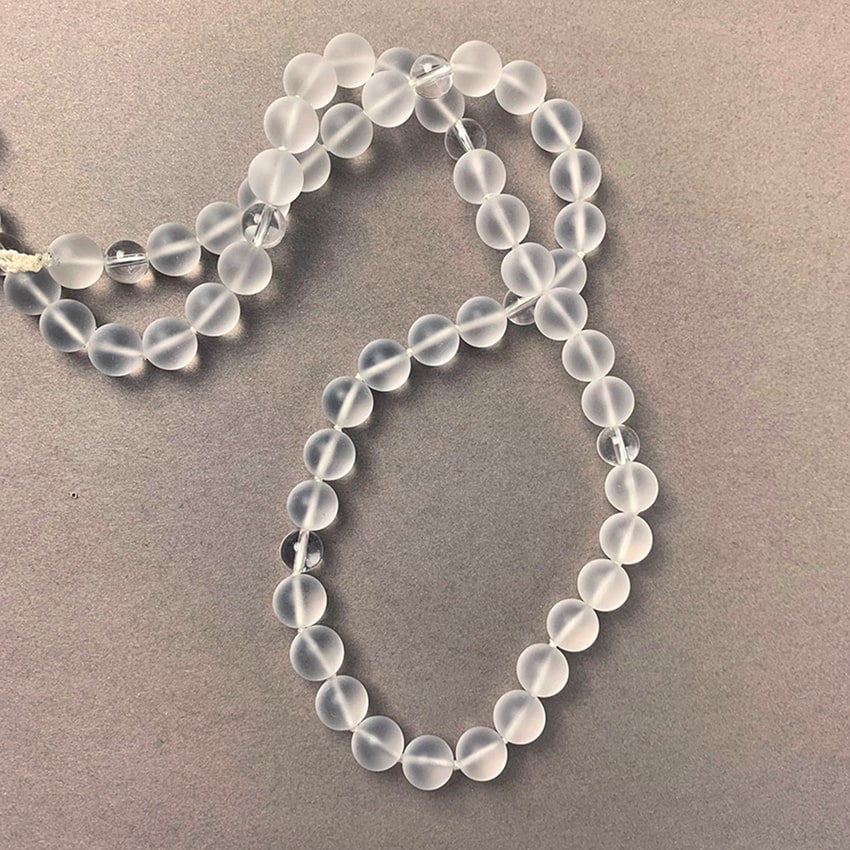
Physically and supraphysically, this combination appears to support balanced respiratory function and nourish the supraphysical anatomy associated with respiration. In its presence, it seems to enhance the transformation of the oxygen spectrum, making it more harmonious and useful to the human body.
In the emotional and causal bodies, its nourishment may help us recognize feeling-photos and causal information without feeling compelled to engage with every connection that presents itself.
In the mental body, the balance it provides may help us dip into the waters of the universal mind without creating so many waves that we have difficulty receiving new thoughts.
And in the intuitive body, the influence of Quartz feels quieting. It helps me to say:
I know what I know.
When I’m ready for more, it will be there.
And I’m open to being ready.
Clear Quartz & Frosted Quartz appear to support our ability to exchange with our environment without losing our own center.
Breathing Is Only the Beginning
When I began this exploration, I simply wanted to understand what compels us to take another physical breath.
I ended up somewhere I never expected.
I’m beginning to see breathing as the physical expression of something much larger.
We are continually exchanging with the world around us—not only physically, but emotionally, causally, mentally, and intuitively.
Perhaps understanding these exchanges can make us more conscious of the many ways we are in relationship with the world around us and the people in it.
Shop Harmony™ Necklace
Subscribe to Our Newsletter
Isabelle Morton, B.S., is the founder of the Gemstone Therapy Institute and GEMFormulas, and the original visionary behind Diamond and Gemstone Therapy, which she began developing in 1987. She continues to study and explore the therapeutic properties and applications of gemstones and Diamonds. Isabelle continues to expand her library of educational material. Thousands of people and pets around the world have benefited from her work. Her dream is to see Diamond and Gemstone Therapy recognized as meaningful energy medicine modalities.
Learn more at gemformulas.com