Have you ever found yourself craving something you knew wasn’t particularly good for you?
Perhaps it was a sweet treat, a salty snack, or a particular comfort food. You weren’t necessarily hungry, but something inside you wanted it.
Most of us are familiar with food cravings. But have you ever considered that we might experience similar cravings in our emotions, memories, and thoughts?
Why does this matter?
Because when we become more aware of what we’re drawn to—and why—we begin to recognize patterns that may be influencing our happiness, relationships, and everyday choices.
And with greater self-awareness comes something valuable: the freedom to make different choices.
To explore that possibility, let’s take a different look at the Digestive System.
Beyond digesting food and assimilating nutrients, the Digestive System also plays a role in generating the urges that draw us toward foods our bodies want or need.
The Digestive System Does More Than Digest Food
We usually think of digestion as the process of breaking down food, absorbing nutrients, and eliminating what the body doesn’t need.
But there’s another aspect of the Digestive System that interests me: its relationship with our natural desires for nourishment.
Our bodies have complex ways of regulating hunger, appetite, and nutritional needs. Within Gemstone Therapy, I also explore the possibility that the Digestive System has an energetic role in helping us recognize and become attracted to what nourishes us.
Think about how it feels to be naturally drawn to a food that leaves you satisfied. Now compare that with an almost irresistible craving for something that doesn’t make you feel particularly good afterward.
In my understanding of the Digestive System’s energetic functions, these experiences illustrate an important distinction between healthy desire and distorted craving.
When this energetic function is balanced, our natural desires can help guide us toward what nourishes us. When it becomes imbalanced, those desires may become distorted into cravings for things that don’t truly satisfy us.
In Gemstone Therapy, we consider unhealthy cravings one possible sign of an energetic imbalance in the Digestive System.
This doesn’t mean that every food craving indicates an energetic imbalance, or that an energetic evaluation establishes a medical condition. Cravings can have many physiological and psychological influences.
But the energetic perspective invites us to consider something else: Could similar imbalances in the Digestive System also be reflected in our emotional, memory, and mental bodies?
The Digestive System in the Subtle Bodies
In Gemstone Therapy, we work with the physical body and a series of subtle bodies associated with different aspects of our experience.
These include our emotional, memory, mental, and intuitive dimensions.
One of the principles I’ve explored is that the fundamental activities of our physical systems may have corresponding expressions in these subtle bodies.
For the Digestive System, an important activity is recognizing, taking in, and assimilating what nourishes us.
When we explore that activity beyond the physical body, some intriguing questions arise.
What are we emotionally hungry for?
What memories do we repeatedly return to?
What kinds of thoughts and experiences does our mind crave?
And perhaps most importantly, are these desires genuinely nourishing us?
Emotional Cravings: What Feelings Do You Seek?
We often think of emotions as something that happens to us in response to life’s circumstances.
But sometimes we may unconsciously seek experiences that produce particular emotional states.

For example, someone who frequently feels unappreciated might find themselves repeatedly drawn into situations where they experience that same feeling.
Someone accustomed to conflict may feel strangely uncomfortable when life becomes peaceful.
These patterns don’t necessarily mean we consciously want unpleasant experiences. Familiar emotional states can exert a powerful pull, even when they leave us feeling unhappy.
On the other hand, we may naturally seek experiences that help us feel peaceful, joyful, loved, or emotionally balanced.
The distinction worth exploring is whether our emotional desires lead us toward greater well-being or keep us repeating patterns that no longer serve us.
In the emotional body, these recurring attractions can be understood as a form of craving.
Memory Cravings: Why Do We Keep Going Back?
Have you ever noticed yourself returning to the same memory again and again?

Perhaps it’s an argument from years ago, a missed opportunity, an embarrassing experience, or something someone said that hurt your feelings.
You may have examined the memory countless times. You know what happened. Yet something keeps drawing you back.
Revisiting memories can be valuable. It can help us understand our experiences, learn from them, and process difficult emotions.
But sometimes we return to memories without gaining any new understanding.
We simply relive the experience.
It’s a little like repeatedly eating a food we crave, even though we know we’ll feel uncomfortable afterward.
In the memory body, this repeated attraction to certain memories can be understood as a form of craving.
The important question isn’t whether a memory is pleasant or unpleasant.
It’s whether returning to it continues to serve a meaningful purpose.
Mental Cravings: What Does Your Mind Want More Of?
The mind has its own preferences and appetites.
It often enjoys familiarity, predictability, and information that reinforces what it already believes.
Consider how easily we can become attached to certain sources of information.
We may prefer news programs that agree with our political views, books that reinforce our opinions, or conversations with people who think much as we do.
There’s nothing inherently wrong with having preferences.
But what happens when we become so attached to familiar ideas that we’re unwilling to consider anything different?
Mental cravings can also appear in our attraction to activities.
Computer games, television, reading, puzzles, and countless other pursuits can provide stimulation, comfort, or escape.
Many of these activities are enjoyable and beneficial.
But occasionally, we may find ourselves drawn to them more strongly than we’d like.
We keep playing, watching, reading, or scrolling long after we intended to stop.
In the mental body, these compelling desires may be another expression of an energetic Digestive System imbalance.
Again, the activity itself isn’t necessarily the issue.
What interests me is the nature of our attraction to it.
Are we choosing the experience freely, or does the desire seem to be choosing for us?
When Does a Desire Become a Craving?
I think it’s important not to label every strong desire or repeated behavior as an imbalance.
We all have preferences, interests, habits, and sources of pleasure.
A craving, as I’m using the word here, is a desire that becomes unusually compelling, repetitive, or difficult to satisfy—even when pursuing it doesn’t leave us feeling particularly good.

This isn’t a clinical definition. It’s a useful distinction for the kind of self-exploration we’re discussing.
Rather than judging the desire, we can become curious about it.
What am I seeking?
What do I expect to receive from this experience?
And how do I actually feel afterward?
These questions can reveal a great deal about our relationship with nourishment—not only physically, but emotionally and mentally, too.
Awareness Gives Us a Choice
Sometimes we repeat familiar patterns without even realizing we’re doing it.
We may find ourselves drawn into relationships that leave us feeling unappreciated. We may revisit memories that bring us down, or become absorbed in thoughts and activities that leave us feeling dissatisfied.
But when we begin to recognize these patterns, something changes.
We have a choice.
We can continue doing what we’ve always done, or we can choose something different.
With greater awareness, we can begin redirecting our lives toward more joy and contentment.
Our relationships may improve. Our outlook may brighten. Even our sense of self-worth can grow.
That’s one of the reasons I find exploring the body’s systems through Gemstone Therapy so fascinating. It’s not just about energetic support. It’s also about discovering more about ourselves.
An Exercise: Exploring Your Own Patterns
I’d like to invite you to explore your own patterns through a little self-reflection.
You don’t need gemstones or any previous Gemstone Therapy experience. Just find a quiet moment to consider the following questions. You might want to write down your answers, especially if you notice a pattern you’d like to understand better.
1. Explore your emotional desires.
Consider whether there are emotional experiences you repeatedly seek or find yourself drawn into.
Are there familiar emotional patterns that leave you feeling uncomfortable or depleted?
Are there experiences that consistently help you feel emotionally nourished?
2. Explore your relationship with memories.
Are there memories you revisit frequently?
When you return to them, do you gain new understanding, or do you find yourself reliving the same feelings?
How do you feel afterward?
3. Explore your mental appetites.
What kinds of information, thoughts, or activities does your mind seek?
Do you find yourself drawn toward familiar ideas that reinforce what you already believe?
Are there activities you sometimes have difficulty stopping, even when you’d rather be doing something else?
Observe Without Judgment
This exercise isn’t about finding something wrong with yourself.
I’m not asking you to eliminate cravings, change your habits, or judge your choices.
In fact, I’d encourage you to approach the exercise with as much objectivity and compassion as possible.
Simply notice what you discover.
You may recognize a pattern you’ve never considered before. Or you may find that your desires are generally comfortable, balanced, and satisfying.
Either observation is valuable.
You might also notice these patterns as they arise in everyday life. When you feel a strong desire for something, pause and ask yourself what you’re seeking and whether the experience is truly nourishing you.
The intention is simply to understand yourself more deeply.
You don’t have to change anything you discover. But when you recognize a familiar pattern, you may find yourself approaching it differently.
Instead of automatically following an old desire or habit, you can pause and ask, Is this really what I want?
Sometimes that moment of awareness is where a different choice begins.
Exploring These Patterns Through Gemstone Therapy
Self-reflection can help us recognize patterns in our desires and cravings. Gemstone Therapy offers another way to explore these patterns and observe whether they change.
One of the things I find most fascinating about Gemstone Therapy is exploring the relationship between the body’s physical systems and their expressions in the subtle bodies.
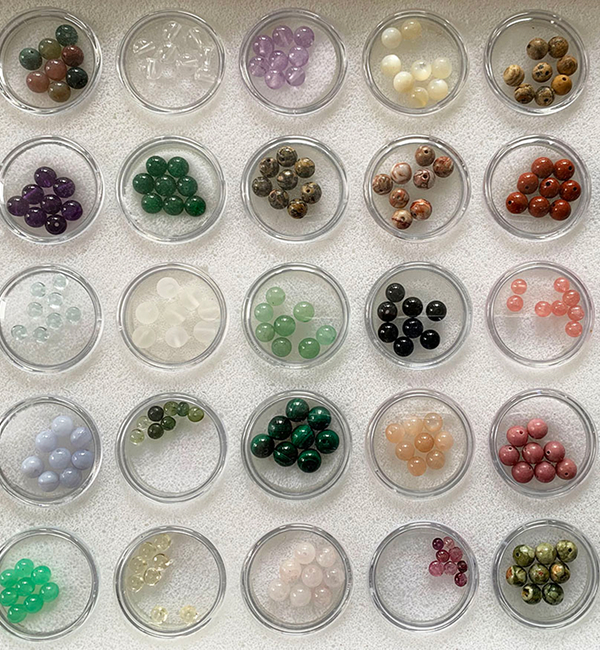
I’ve developed procedures using carefully selected gemstones placed at specific locations on the body, which I call system windows.
Through this work, we can explore not only our physical experiences but also how each system’s fundamental activities may be reflected in our emotional, memory, and mental bodies.
If you choose to work with Digestive System gemstones, I encourage you to record your observations beforehand.
Then, after your gemstone exploration, return to those observations.
Do certain cravings seem less compelling?
Do you notice changes in the memories you revisit, the emotional experiences you’re drawn toward, or the activities your mind seeks?
Perhaps you’ll notice something unexpected.
Or perhaps nothing will seem different.
There’s no need to anticipate a particular result. Just observe what, if anything, has changed. Any changes you notice are personal observations, not proof that the gemstones caused them.
Discover Gemstone Therapy for Systems Health
For many years, I taught my systems work as part of advanced Gemstone Therapy Practitioner training.
But I often wondered how I could make these techniques simple enough for anyone to learn.
Now I’ve developed a new course, Gemstone Therapy for Systems Health, that introduces practical ways to explore the body’s individual systems using just a few small gemstones.
You’ll learn where to place the gemstones, how to work with them, and how to observe your experiences.
You’ll also discover how the fundamental activities of different body systems may be reflected in your subtle bodies.
No previous Gemstone Therapy experience is required.
If this exploration of the Digestive System has sparked your curiosity, I warmly invite you to learn more.
Discover how much you can explore with just a few small gemstones.
>> Explore Gemstone Therapy for Systems Health
>> Subscribe to our Newsletter: Healing Gemstone News
Gemstone Therapy is an energetic wellness practice intended to complement, not replace, medical care. The subtle-body relationships described here are part of the Gemstone Therapy framework and have not been established by clinical research.