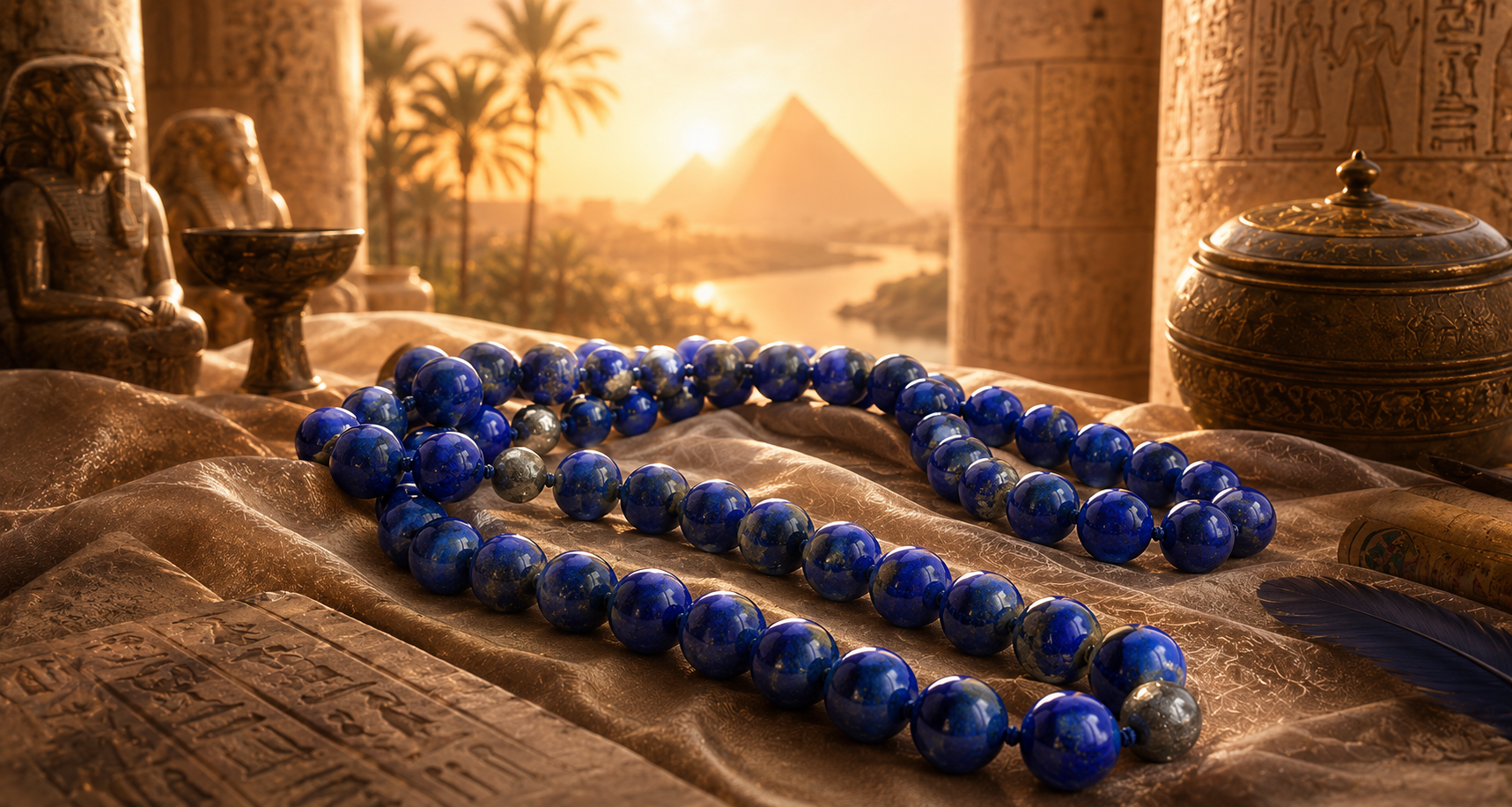
Few gemstones possess the history, beauty, or healing qualities of Lapis Lazuli. For thousands of years, this deep blue stone has been sought for its spiritual power, its royal symbolism, and its remarkable effects on the mind and spirit. Today, Gemstone Therapy has given us a precise new language to describe what ancient civilizations understood through direct experience: that healing-quality Lapis Lazuli is genuinely extraordinary.
Its story begins more than 8,000 years ago and it begins in the same mountains where it is still mined today.
A Stone That Traveled the Ancient World
The earliest known use of Lapis Lazuli for jewelry and beads dates back to the Neolithic period, with artifacts discovered at ancient sites that place this vivid blue stone firmly in the hands of our earliest ancestors. The source then was the same as it is now: the mines of Afghanistan, which have been producing Lapis Lazuli continuously for longer than almost any other gemstone source on earth.
From those mountain mines, Lapis Lazuli traveled. Through ancient trade networks that stretched across continents, this blue stone made its way into the hands of royalty, priests, and craftspeople across the known world. Lapis Lazuli jewelry and amulets appear prominently in pre-dynastic Egyptian sites. It was extensively traded and worn by ancient Mesopotamian civilizations, appearing in cylinder seals and elaborate headdresses. Wherever it arrived, it was immediately recognized as something extraordinary.
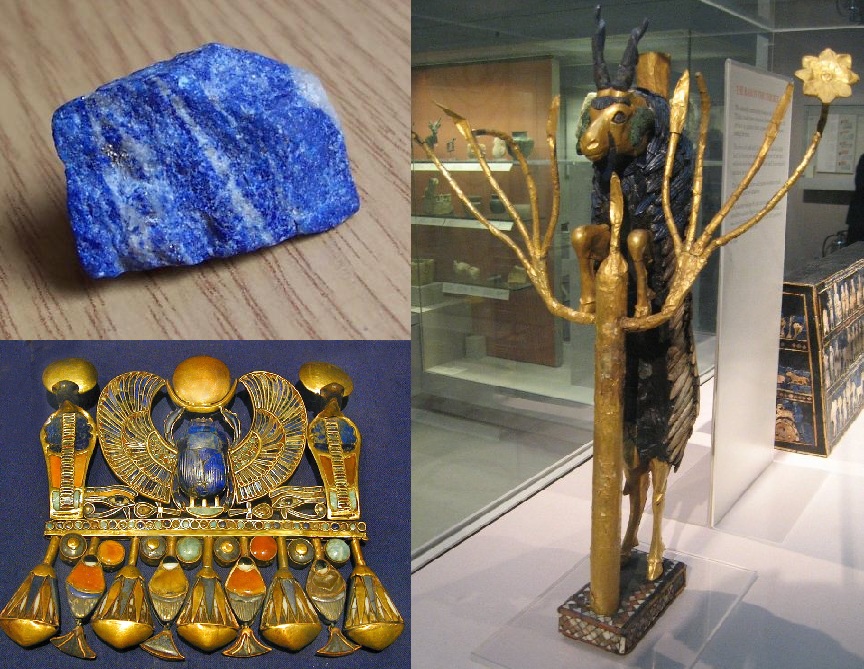
Top left: A specimen of Lapis Lazuli; Bottom left: Lapis lazuli used in Scarab Pectoral, from the Tomb of Tutankhamun, in the Valley of the Kings at Thebes, Ancient Egypt, c. 1361-52 BC; Right: Lapis lazuli used in “Ram in a Thicket”, from the Royal Tombs of Ur, Sumer, Ancient Mesopotamia, modern-day Iraq, c. 2600-2500 B.C.
These ancient civilizations put Lapis Lazuli to remarkable use. It appeared in:
- Sacred amulets and talismans
- Royal burial items, accompanying the honored dead into the next world
- Architectural mosaics and inlays
- Sculptures of gods and rulers
- Cosmetics — ground Lapis Lazuli was used as eyeshadow and pigment
- Jewelry of every kind, worn from the neck, the wrist, and the ear
The range of its use tells us something important: this was not simply a decorative stone. It was considered powerful.
What Lapis Lazuli Meant to the Ancient World
We cannot know with certainty what the ancients felt when they held this stone, or the secret knowledge they may have carried about its properties. But the historical record gives us meaningful clues, and the patterns across vastly different cultures are difficult to dismiss as coincidence.
In ancient Egypt, Lapis Lazuli symbolized truth and spiritual rebirth. High priests wore Lapis Lazuli around their necks to ground their judgments in divine truth. The stone’s deep blue was associated with the heavens, and its presence in the tomb was believed to support the soul’s journey into the afterlife.

In Mesopotamia — across Sumerian, Akkadian, and Babylonian traditions — Lapis Lazuli was the symbol of royalty and the divine realm. Temples and divine thrones were adorned with Lapis Lazuli accents, believed to attract the presence of the gods. To wear Lapis Lazuli was to align oneself with divine authority.
In ancient Greece and Rome, the Romans were captivated by the shimmering Pyrite flecks scattered through the stone, which they associated with the stars. They linked to Venus, the goddess of love, beauty, and fertility. The stone was considered both a powerful aphrodisiac and a talisman of spiritual protection.
In biblical and early Jewish tradition, scholars widely agree that the “sapphire” mentioned throughout the Old Testament was almost certainly Lapis Lazuli — the true Blue Sapphire as we know it today was not yet in common use at that time. In this tradition, Lapis Lazuli symbolized the throne of God, divine revelation, and the footstool of the heavens. It was one of the sacred stones embedded in the breastplate of the High Priest — a garment designed to carry the full spectrum of divine light.
We Think We Know Why
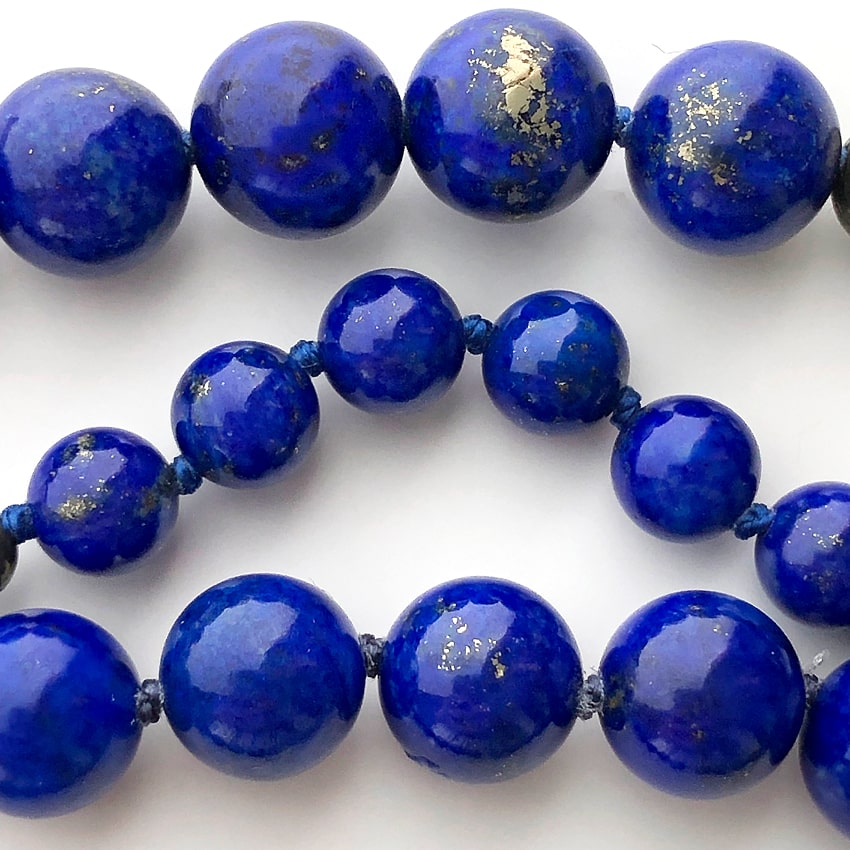
Physically, Lapis Lazuli is unique among gemstones. Naturally vivid blue stones are extraordinarily rare in the mineral world — and the deep, saturated blue of high-quality Lapis Lazuli, scattered with the golden glint of Pyrite, produces an effect that is genuinely unlike anything else in nature. Who could blame the Romans for seeing the night sky in it?
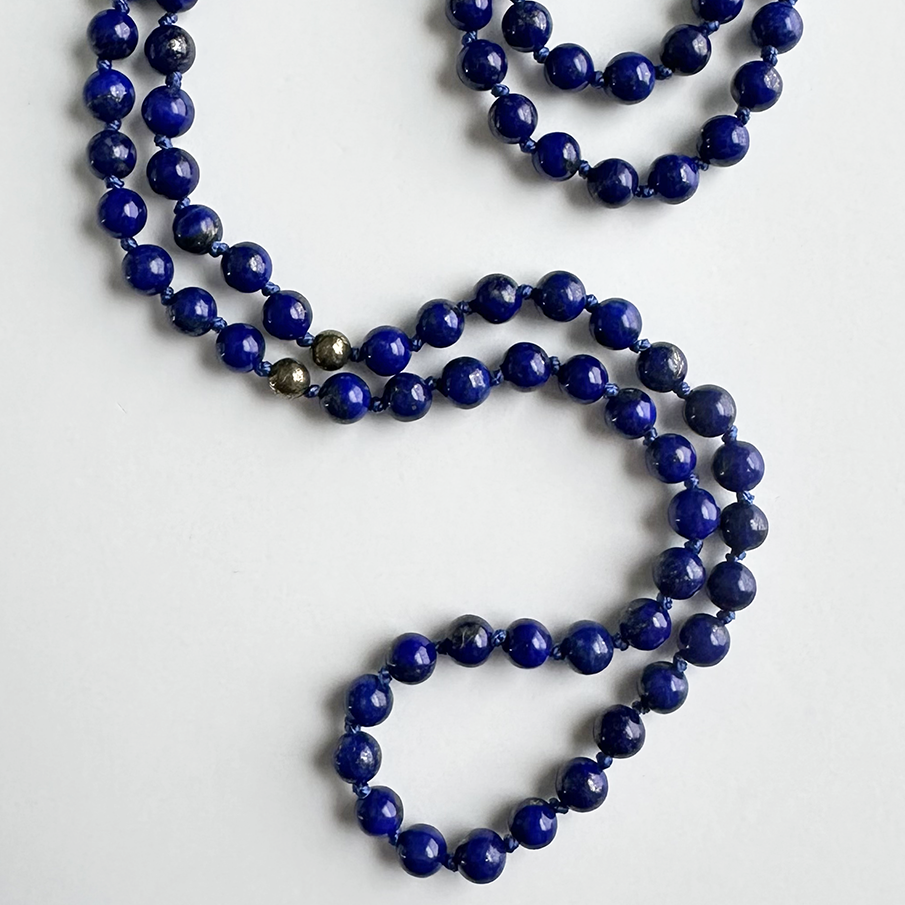
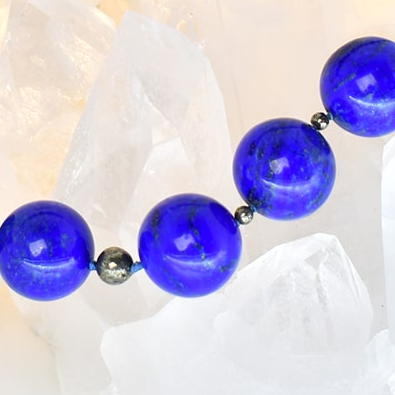
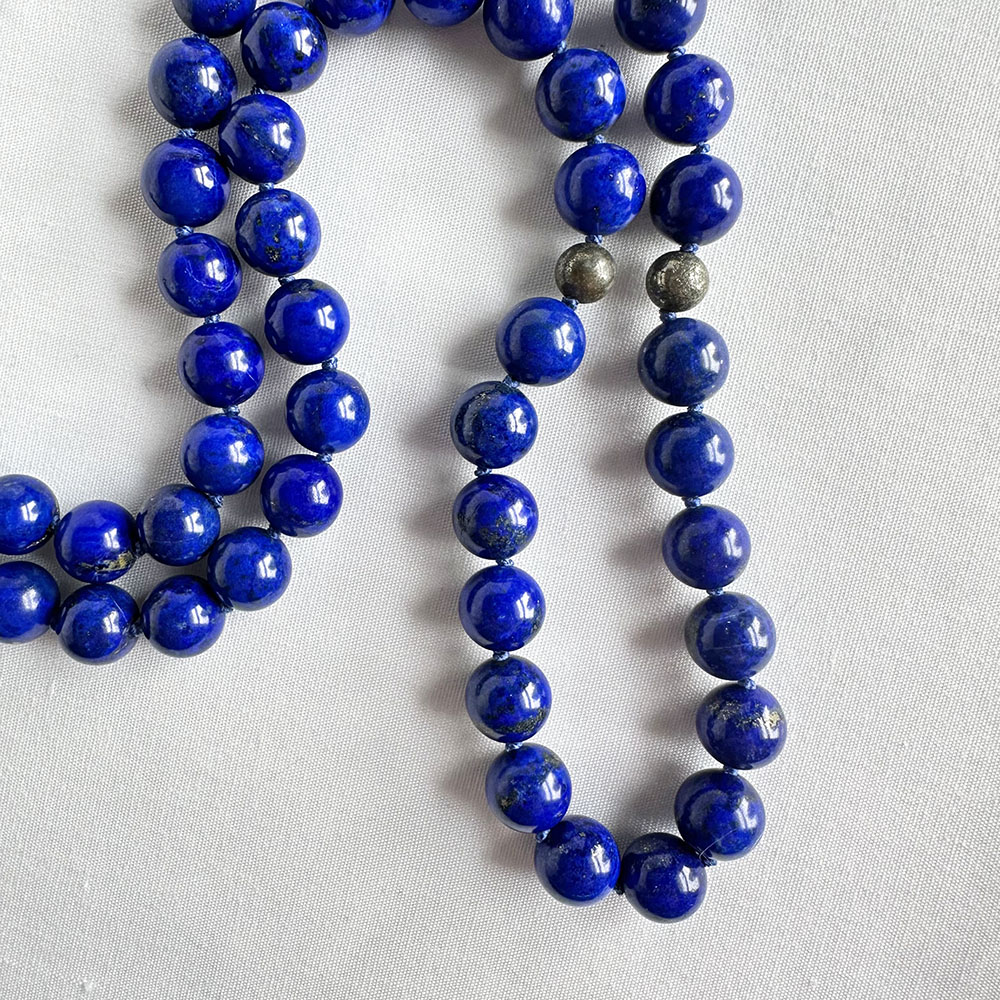
It is worth noting that not all Lapis Lazuli contains Pyrite; it is the higher quality stones that carry those beautiful golden flecks. This is one reason we pair our Lapis Lazuli necklaces with Pyrite beads: Pyrite is a symbiotic gemstone that enhances and amplifies the work of the Lapis Lazuli, making the combination more potent than either stone alone.
But the physical beauty of Lapis Lazuli only explains so much. These ancient civilizations were in active contact with one another — trading goods, ideas, and culture across vast distances. And yet the deeper question remains: why, across all of these cultures, was Lapis Lazuli so consistently associated with truth, divine connection, spiritual protection, and royalty? What was it about this stone that made it sacred?
We believe the answer lies in what Lapis Lazuli actually does.
The Properties of Lapis Lazuli: Uncovered All Over Again
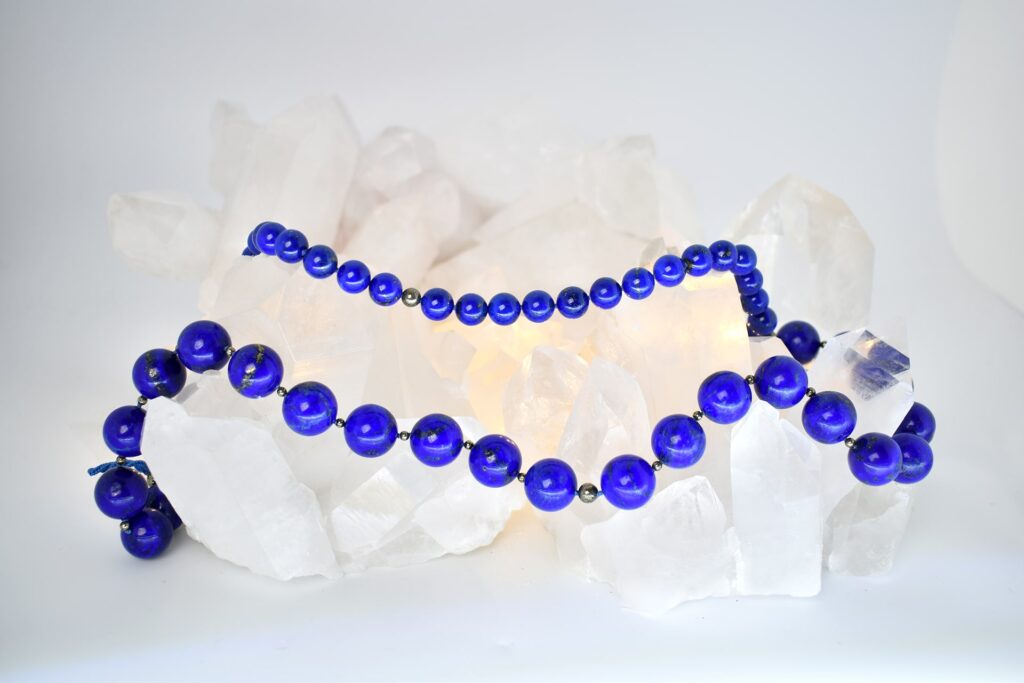
The energetic properties of Lapis Lazuli as we understand them today make remarkable sense of the ways the ancients used it. Lapis Lazuli is Lapis Lazuli. Its nature has always been what it is. What has changed is not the stone — it is our vocabulary.
Today, with a clearer understanding of energetic anatomy and the subtle dimensions of our physical and spiritual bodies, we can describe with greater precision what our ancestors may have simply known through direct experience. The properties they honored intuitively, we can now articulate.
To explore the full range of what Lapis Lazuli offers, we invite you to view our Lapis Lazuli & Pyrite Necklace, where we describe the energetic benefits of this extraordinary stone as we understand them today — including its support for truth-seeking, mental clarity, spiritual connection, intuition, and the protection of the mind’s energetic boundaries.
Completing Ancient Circles
There is one more dimension to wearing Lapis Lazuli today that we find particularly compelling.
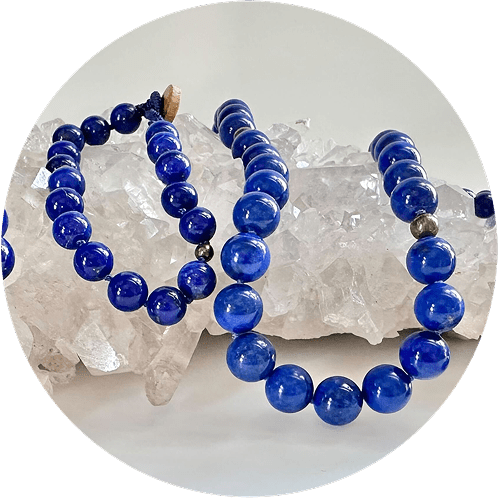
For those who carry past-life connections to the ancient civilizations described above — Egypt, Mesopotamia, the early biblical world — wearing Lapis Lazuli now may do more than support your present well-being. It may help you uncover ways you worked with this stone in long-lost incarnations, rekindling an ancient relationship that may never have truly ended.
Wearing Lapis Lazuli today can represent the completion of karmic circles that were opened in lifetimes lived during those ancient times. And closing those circles matters because with each one that closes, we reclaim a measure of personal freedom. We release the weight of ancient habits, outgrown beliefs, and obligations carried forward across time that were never meant to travel this far.
Discover what this timeless stone may have to offer you:
Shop Lapis Lazuli & Pyrite Necklace
Subscribe to Our Newsletter
Isabelle Morton, B.S., is the founder of the Gemstone Therapy Institute and GEMFormulas, and the original visionary behind Diamond and Gemstone Therapy, which she began developing in 1987. She continues to study and explore the therapeutic properties and applications of gemstones and Diamonds. Isabelle continues to expand her library of educational material. Thousands of people and pets around the world have benefited from her work. Her dream is to see Diamond and Gemstone Therapy recognized as meaningful energy medicine modalities.
Learn more at gemformulas.com