I knew my exploration of the body’s systems would teach me a lot about our energetic nature and how it works. But my work with the Skeletal System stretched my mind to the point of discomfort.
I began with a seemingly simple question: If the physical skeleton provides structure for the body, what does the Skeletal System do in the subtle bodies? I expected the answer to expand my understanding of structure.
I didn’t expect it to challenge the way I pictured the subtle bodies themselves.
Structure Supports Function
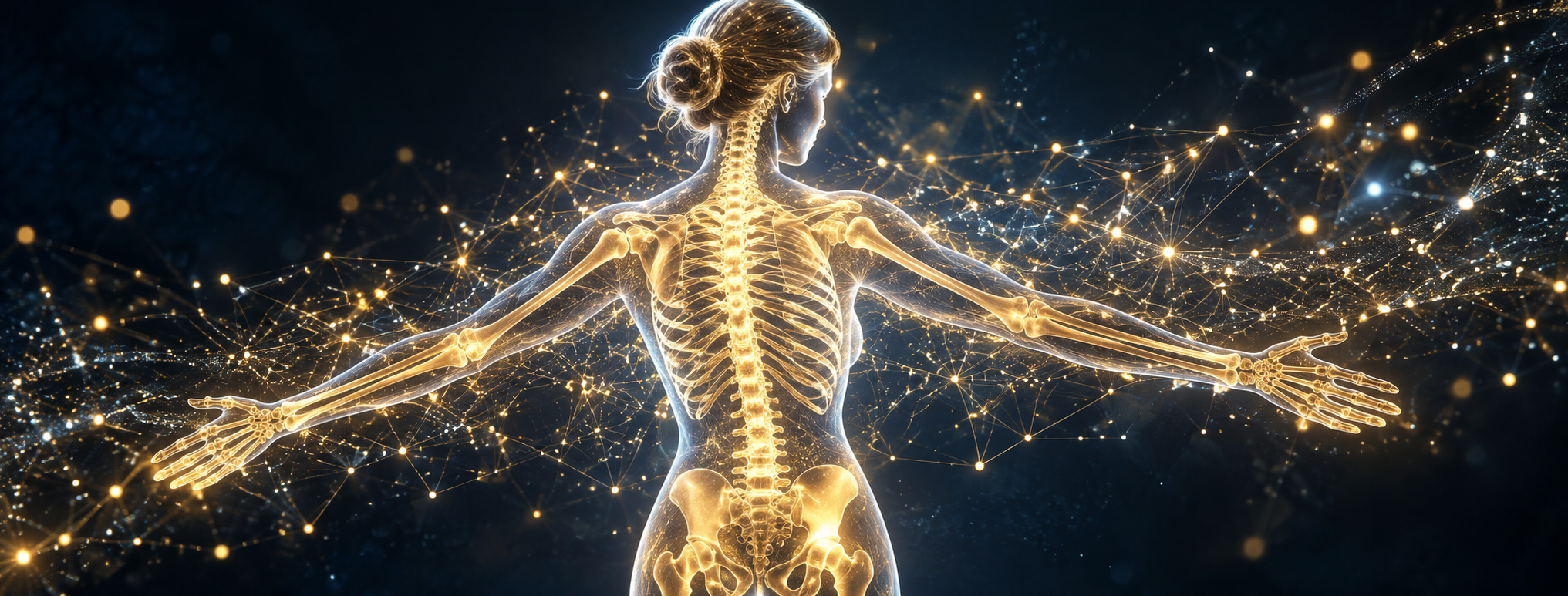
The physical skeleton is easy to understand. It provides the primary structural framework of the body. Our muscles, attached to bones, allow us to move. The cranium provides a structure that contains and protects the brain. Our teeth provide the structure needed to bite and chew our food.
The skeleton doesn’t perform all these other functions. Instead, it provides the framework that allows them to happen.
That gave me a simple starting point:
Structure supports function.
But when I began following structure into the subtle bodies, the familiar anatomy of the physical body stopped being a useful model.
What Happens to Anatomy as Vibration Rises?
In the physical body, our systems have highly differentiated anatomy. We can distinguish bones from muscles, blood vessels from nerves, and one organ from another.
As vibration rises through the subtle bodies, something interesting happens.
In the emotional body, the systems still have recognizable energetic anatomy, but it is less distinctly defined than physical anatomy. In the causal body, where memories reside, their anatomy becomes less differentiated still. The same progression continues into the mental body.
Yet the functions of the systems don’t disappear.
The Circulatory System still transports. The Muscular System still moves. The Eliminatory System still lets go. And the Skeletal System still provides structure.
This led me to an important realization:
As vibration rises, structure becomes progressively less anatomically differentiated. The functions of the systems remain distinguishable even as their anatomy becomes less distinguishable.
And then I reached the intuitive body.
The Intuitive Body Stretched My Understanding of Structure
The intuitive body lies at the highest reaches of manifested existence. I understand it to be as devoid of matter as something can be while remaining within the manifested worlds of matter, energy, space, and time.
Even the words become difficult here.
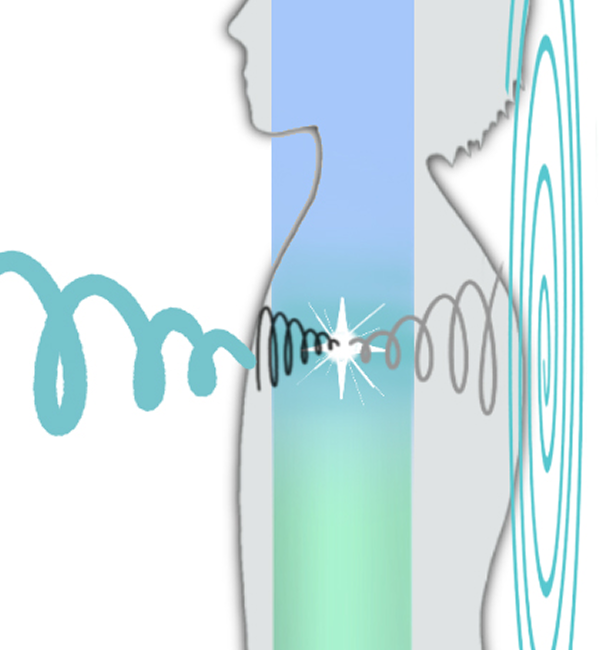
The intuitive body is difficult to describe in physical terms. I perceive it as a field of highly organized energy, although even energy isn’t quite the right word. Substance is even less adequate. Manifested light may come closer, distinguishing it from the pure spiritual light beyond the worlds of matter, energy, space, and time.
Trying to describe it feels a little like trying to describe three dimensions from within a two-dimensional world.
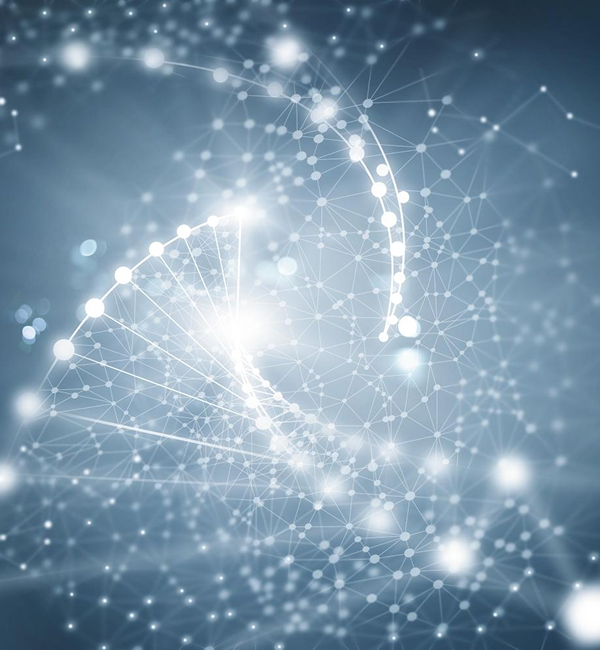
What I perceive is an extraordinarily vast, highly organized field. It appears to consist of perfectly arranged units. A honeycomb is the closest visual analogy I can think of, although that isn’t really accurate either. The apparent boundaries between the units aren’t walls or separations in the physical sense, and what appears to be empty space within them isn’t empty at all.
At each level of vibration within the intuitive body, I perceive a vast field of these perfectly arranged units. Taken together, these uncountable levels and units form an extraordinarily vast and complex landscape.
And then came the realization that stretched my thinking:
The intuitive body IS its structure.
There isn’t a separate structure within the field in the way a skeleton exists within the physical body. The field itself provides the framework.
Even more remarkable, all the other system functions operate through this same highly organized matrix. They don’t need their own separate anatomy.
We have traveled from physical anatomy, in which bones, muscles, blood vessels, and organs are clearly differentiated. By the time we reach the intuitive body, the system functions remain distinguishable, but the anatomy through which they operate has become extraordinarily unified.
What Does This Structure Make Possible?
One of the most fascinating examples involves asking for intuitive guidance.
Suppose a thought arises in the mental body:
I need guidance about my business.
When that thought enters an optimally functioning intuitive body, something remarkable happens. Instead of remaining a localized point of thought or desire, it spreads throughout the intuitive body. The entire field becomes impressed with the question.
I can’t yet explain how this happens. I suspect several systems may work together to accomplish it.
But the Skeletal System provides the structure that makes it possible.
This seems particularly important because Soul exists beyond the worlds of matter, energy, space, and time. Soul is whole. When a question fills the intuitive body, the wholeness of the intuitive body can communicate with the wholeness of Soul.
If something interferes with the ability of the question to fill the intuitive field, the impression reaching Soul may be incomplete, and the guidance that comes forth may therefore also be incomplete.
But the basic principle is clear: structure provides the framework through which other functions can occur.
That is true of bones. And, astonishingly, it appears to remain true at the highest reaches of manifested existence.
Then I Came Back to the Bones
The Skeletal System presented me with another puzzle.
For years, I have understood the skeleton to be a repository for certain unwanted energies—energies that the body doesn’t know how to handle or release in another way.
Not all unwanted energy goes into the skeleton. I have encountered unwanted energy trapped in other tissues and organs. But some of these unwanted energies appear to make their way into the bones.
And once there, my observation is that they remain there for the rest of the person’s life.
I’ve never found a way to clear them from the Skeletal System. Over time, I perceive them becoming part of the structure itself.
For a long time, it was easy to regard this as an undesirable accumulation. After all, if the body has no further use for an energy, why would we want it accumulating in our bones?
But then I started looking at nature.
What Falls Isn’t Necessarily Wasted
Leaves fall from trees in autumn.
Rain falls from clouds.
In the ocean, detritus and the remains of organisms settle through the water to the seafloor.
At first glance, these can look like processes of discarding. Something is no longer being held where it was, so it falls.
But falling isn’t necessarily wasteful.
Autumn leaves fall to Earth and eventually contribute organic material to the soil that supports new growth. Rain falls and provides water essential to life. Material settles through the ocean, providing food for deep-sea organisms, while some reaches the seabed and contributes to long-term carbon storage.
And beneath all of this is structure.
The land and seafloor provide Earth’s underlying surface—the structural framework upon which these processes can occur.
This made me reconsider what I thought I understood about unwanted energy entering bone.
Perhaps I’ve been placing too much emphasis on the word unwanted.
An energy can be unwanted where it is without being useless everywhere.
Unwanted in one context doesn’t necessarily mean useless in another.
This Blew My Mind
And it left me with a question I don’t yet know how to answer.
What if the Skeletal System isn’t simply storing unwanted energy because the body has nowhere else to put it?
What if something more resourceful is happening?
What if these energies become incorporated into the structure of bone and continue to serve the body in a new way?
Could what appears to be waste actually participate in regeneration?
Questions like this inspire me.
They have changed the way I look at the Skeletal System—and given me more places to explore.
For now, the unanswered questions show me where to look next.
Shop Core Four Necklace
Subscribe to Our Newsletter
Isabelle Morton, B.S., is the founder of the Gemstone Therapy Institute and GEMFormulas, and the original visionary behind Diamond and Gemstone Therapy, which she began developing in 1987. She continues to study and explore the therapeutic properties and applications of gemstones and Diamonds. Isabelle continues to expand her library of educational material. Thousands of people and pets around the world have benefited from her work. Her dream is to see Diamond and Gemstone Therapy recognized as meaningful energy medicine modalities.
Learn more at gemformulas.com